Research Project
Wall-Climbing Robot
Project Duration
2019–2022
Role and Contribution
Project Manager and Lead Developer (Approx. 70% Contribution)
Technologies and Skills Applied
-
Embedded Hardware Design (OrCAD: Schematic Design, PCB Layout)
-
Embedded Software Development (STM32: C with RTOS)
-
UI Design and Development on Linux (Qt, QML)
-
Mechanical Design (CAD: CATIA)
-
Robot Operating System 2 (ROS 2)
-
Control Algorithms & Simulation
-
Scientific Writing (IEEE Journal)
Introduction
Developing a wall-climbing robot was my inaugural research project upon entering the integrated Master’s & Ph.D. programme. The objective was to create a system capable of inspecting hard-to-reach areas in hazardous environments, such as nuclear power plants, where manual inspection is dangerous for humans.
Phase 1 (2019–2020) – Wall-Climbing Robot with an Elevator Drone
The wall-climbing robot featured a ducted fan to generate negative pressure for wall adhesion, controlled by an STM32 microcontroller. A printed circuit board (PCB) was developed for the robot, facilitating the transmission of command and telemetry data via an RF module.
However, the single-unit, wheeled design of the first version could not overcome surface obstacles such as electrical conduits or pipes. Therefore, a system utilising an “elevator drone” was developed to grip and attach the wall-climbing robot at a desired position.
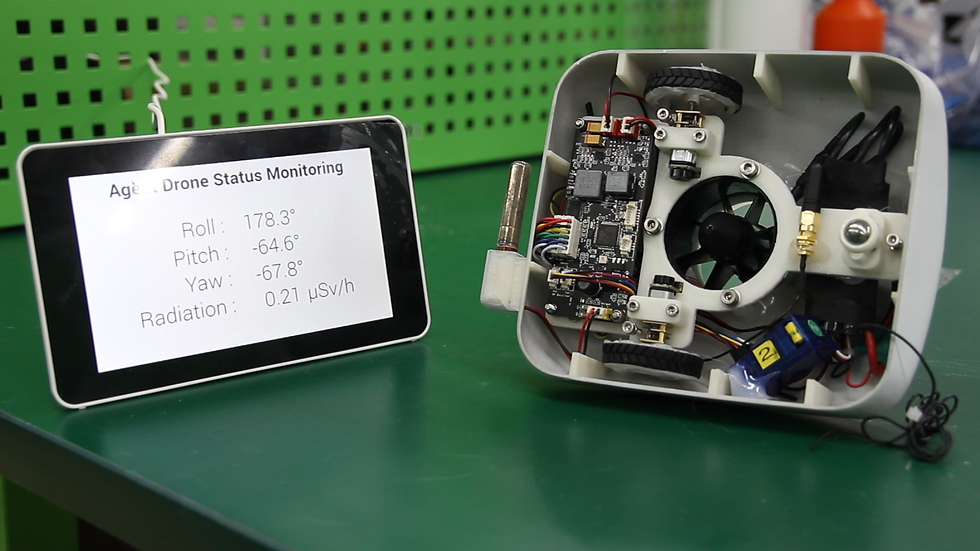
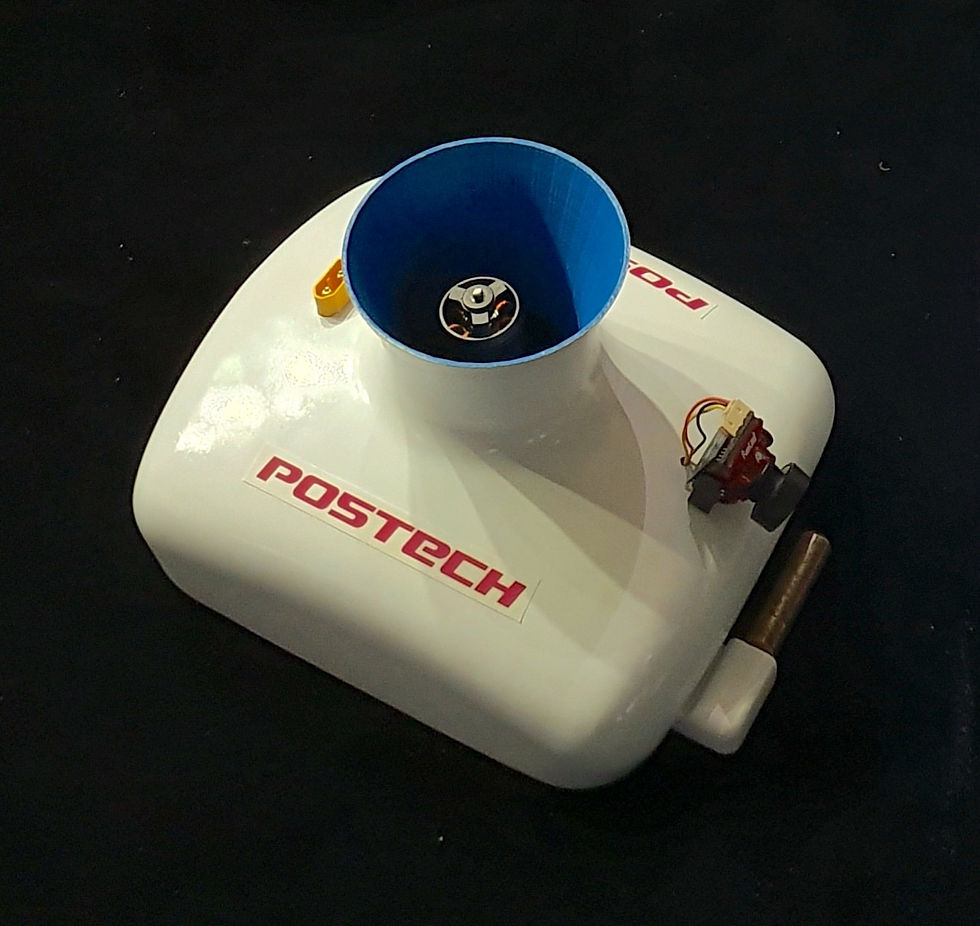
Version 1 of the Wall-Climbing Robot and its Telemetry Monitor UI using Qt (Feb 2020)

Five Phases of Using an Elevator Drone to Attach the Wall-Climbing Robot (Feb 2020)
Phase 2 (2020–2022) – Dual-Unit Wall-Climbing Robot
As a second version, a dual-unit wall-climbing robot connected by a hinge was developed to facilitate obstacle traversal. I developed a “passive hinge mechanism”, where the angle between the two units is aerodynamically controlled by the thrust of the ducted fans.
To minimise weight, the PCB was designed to serve simultaneously as the structural frame (chassis) of the robot. The system integrates a Raspberry Pi Compute Module running Linux with ROS 2 for high-level processing, while real-time control is handled by the STM32 MCU.
The control algorithm utilises a PD controller with a feedforward loop, demonstrating successful inspections in various industrial environments. The research outcomes were published in the peer-reviewed journal IEEE Access.

Robot Hardware Designed in CATIA V5 (2021)

Integrated PCB Chassis: PCB Serving as the Main Structural Frame (Apr 2021)

Dual-Unit Wall-Climbing Robot with Passive Hinge Mechanism (Version 2) (Jan 2022)

Obstacle Traversal using Passive Hinge Mechanism (Feb 2022)

Wall Inspection using Line Laser and Camera (Jan 2022)